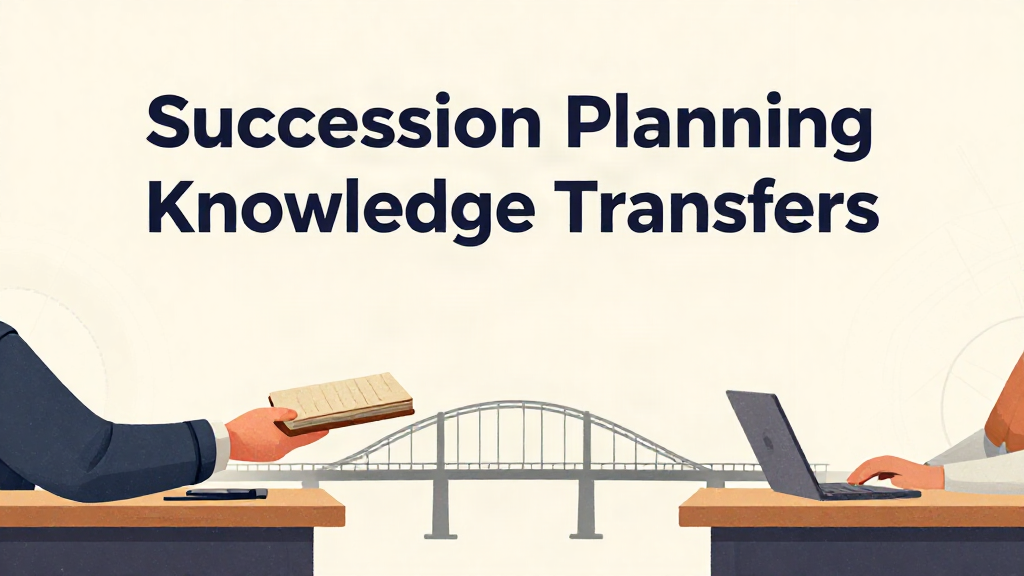
Succession planning vs. knowledge transfer: why you need both
Succession planning decides who takes over a critical role; knowledge transfer makes sure they know how the work gets done. Here is how to run both together.
Read the article → Succession planning decides who takes over a critical role; knowledge transfer makes sure they know how the work gets done. Here is how to run both together.
Read the article →
A five-step plan to cross-train employees: find single points of failure, pick two successors, train inside the real work, capture the reasoning, and test it with the expert out of the room.
Read the article →
What the bus factor is, how to calculate it task by task, why a team-wide number can hide single points of failure, and how to raise it before someone leaves.
Read the article →
What institutional knowledge is, how it differs from tacit and tribal knowledge, why it gathers in a few people, and how to keep it when they leave.
Read the article →
What a wiki, a knowledge base and a shadowing week each keep when someone leaves, where each one fails, and how to choose for your team.
Read the article →
What an exit interview misses, 20 questions that get the work out of one person’s head, and how to turn the answers into a handover the team can search.
Read the article →
Seven signs that what your team knows sits with one person, what it costs when they leave, and where to start while they're here.
Read the article →
A resigning employee takes the way everything works with them. Here is a 3-step knowledge transfer plan you can run before their last day.
Read the article →